

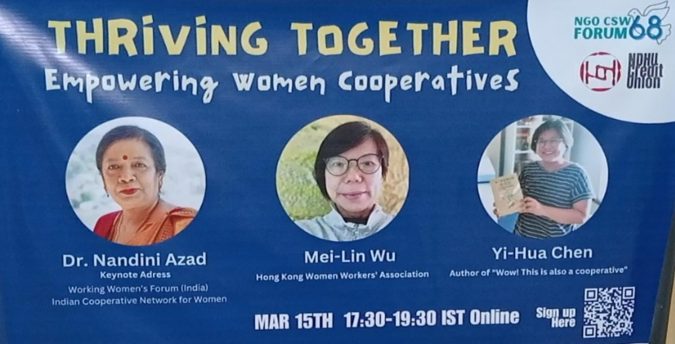
Title: “Thriving Together: Empowering Women Cooperatives”
“The importance of cooperatives for rural women – Policy mechanisms with international views and the practical experience in India”
Internationally Acclaimed Women Cooperator
Dr.Nandini Azad will render the Key note address
Dong Hwa Campus Credit Union, Eastern Taiwan
Date: 15TH MAR 2024 & Time: 17:30 to 19:30
On the subject of the “Importance of Cooperatives for Rural Women in India and Experience Sharing of Indian Cooperative Network for Women (ICNW) Organizations”
It is indeed a great honor to present before you as Chairperson of the board of the Indian Cooperative Network for Women, Advisory Committee and President of the Working Women’s Forum (India) (WWF); Global Board member of the Worlds oldest Cooperative union the International Raiffeisen Union, Germany (re-elected women member in 100 years) and the coordinator of the WFO Working Groups on Cooperatives. It is an honour to share my experience and journeys to such a distinguished gathering at the UNCSW68, HQ parallel event from New York in Taiwan. In the last 4 years we have organized or associated with 10 such global events. We thank the UNCSW profusely for the honour and Trust (as UN Consultative members of 28 years).
I especially thank the Dong Hwa University, Dong Hwa Credit Union Campus, Taiwan Mme.Liu for kindly asking me, us to render the keynote address.
The Working Women’s Forum (WWF) and Indian Cooperative Network for Women (ICNW), headquartered in Chennai, are leading the way in empowering poor women in the informal sector worldwide. With over 620,000 members across four states in South India namely Tamil Nadu, Karnataka, Andhra Pradesh, and Telangana with branches in 14 locations. We are successfully marching towards half a century of service to these women through models.
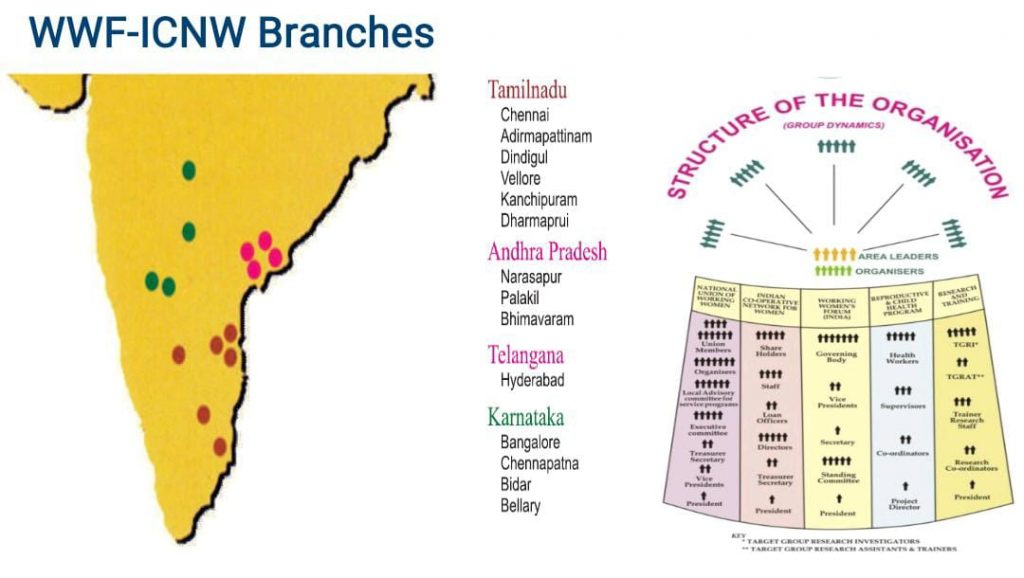
I feel proud to share with you that our members are engaged in 267 occupations, including fish, flower, and vegetable selling, idli (rice cake) and snack shopkeeping, weaving, farming, lace artistry, hawking, and more. In services, trading, petty production and manufacturing. They represent a convergence of class, gender, and caste, making their social conditions untenable. But our grassroots women have demonstrated that they can cope and recover from any shock or disaster through our iconic “Gender and Equity model”.
Through this model, we have disbursed 500 crore rupees in petty loans (approximately 5 billion US$), with a high repayment rate. Our outcomes have been developed within the context of SDGs. Our members are not just surviving, but thriving, and they are leading the charge for gender equity and social justice.
I stand before you today with not only a message of hope and opportunity but also for cohesive collaboration in cooperative sectors between India and Taiwan. It is high time we work together for growth and prosperity with serious attention to greater gender equality. And Hong Kong stake holders too welcome at this event and global participants.
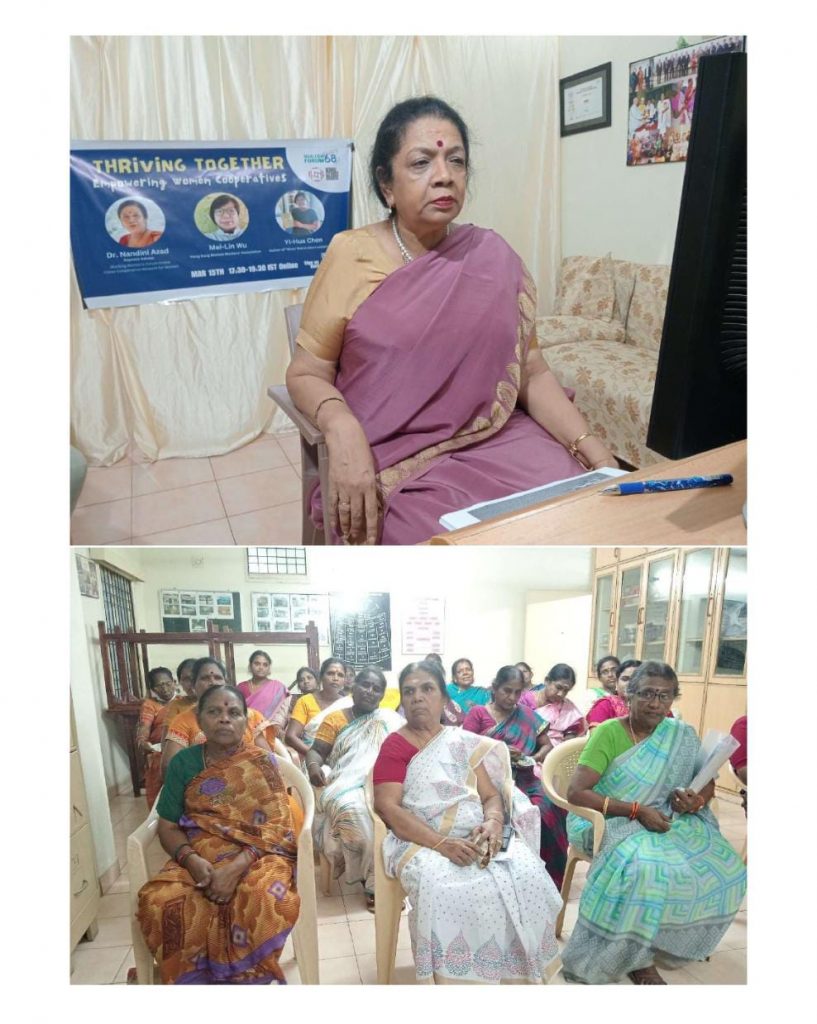
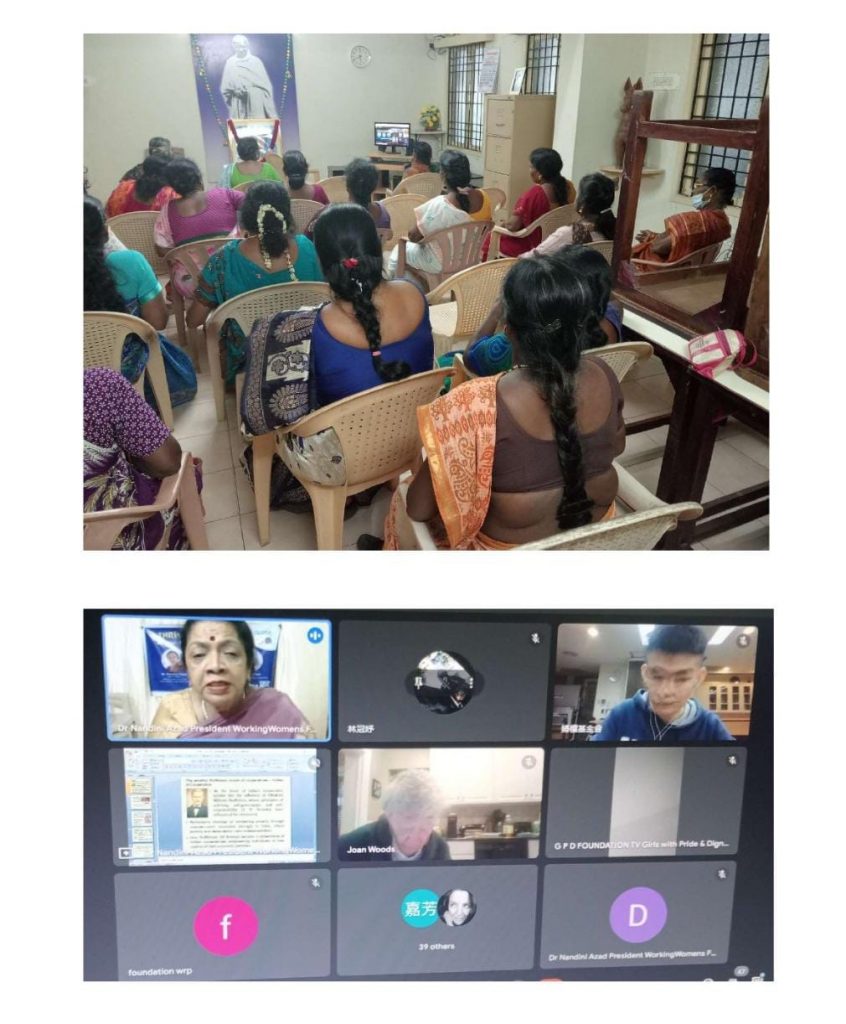
Women & Cooperatives
Through co-operatives, millions of women today in Asia/Pacific have access to social protection, housing, health and child care, financial services.
Cooperatives are democratic/voluntary – ideal mechanisms for building gender equality only when women have equal access including decision-making.
Cooperatives facilitate women’s mobilization – collective bargaining, productive assets (land, credit, labour, training, wages, technology, markets).
Gender is more than a statistic:
The pioneering ICPRD study of 26 countries on the Status of Women in co-operatives in the Asia-Pacific region that I conducted highlighted interesting data, facts and case studies. (2015 – 2017) (Presented to the ICAP cooperative ministers conference in Hanoi, recommending 33% reservation at all levels of cooperatives.
It mirrored the challenges and limitations of being Asia – Pacific women citizens, tempered by patriarchal tendencies.
Yet it highlighted strong women’s/social/people’s movements and engendered by far-reaching government policies and laws that spur women’s participation in co-operatives.
Especially, as Asia now seems to be world’s future economic epicenter.
OVERALL FINDINGS OF THE ASIA PACIFIC ICPRD STUDY OF 26 COUNTRIES
While women’s representation in co-operatives at higher echelons is not significant at decision making levels – new trends, decisions, issues indicate new threshold of change for women.
Hardly 10% women on boards! Over a decade.
A Glimmer of hope can be attributed to the level of international awareness, conventions, gender networking in co-operatives and success of new age women-only co-operatives that are trendsetters, like the Indian Cooperative Network for Women (ICNW).
Emerging leadership space in a structurally difficult and culturally complex scenario that has way forward with possibilities for women.
Indian cooperative History & movement
India, the land of diversity, culture, and innovation, has risen to become the fifth-largest economy in the world. We are heading towards making India a Developed country by 2047. A clarion call has been given by our Prime Minister to achieve the goal of ‘Viksit Bharat’ (Developed India) by 2047 when the country will be celebrating 100 years of Independence (India@100).
Both India and Taiwan have strong economics. Taiwan has made significant investment in sectors such as electronics, manufacturing, and information technology in India. While Taiwanese companies have established a presence in India, contributing to economic growth and employment generation. Culturally also, there have been exchanges between India and Taiwan, including academic collaborations, cultural performances, and people-to-people interactions. Now, we need to enhance our understanding and promote cooperatives with a great goal.
Taiwan
We are well aware that Taiwan has a highly developed capitalist economy and is considered one of the Four Asian Tigers along with Hong Kong, Singapore, and South Korea. The government plays a significant role in economic planning and development through policies that encourage innovation, entrepreneurship, and trade. Cooperative societies, also known as cooperatives, play a role in various sectors of Taiwan’s economy. Cooperatives exist in agriculture, consumer goods, finance, and other industries. These cooperatives are typically formed by individuals or businesses with similar interests or goals to pool resources, share risks, and collectively pursue economic activities. They often emphasize principles such as democratic control, voluntary membership, and equitable distribution of profits among members.
Taiwan has made significant progress in promoting gender equality and empowering women in various spheres of society. Women in Taiwan have access to education and employment opportunities on par with men. The government has implemented policies to support women’s participation in the workforce, including maternity leave, childcare support, and anti-discrimination laws. Despite these advancements, challenges such as gender pay gaps and underrepresentation in leadership positions persist, reflecting broader societal norms and cultural expectations.
In the cooperative sector, India and Taiwan can collaborate to make efforts to address these issues and promote greater gender equality in Taiwan.
Let me outline some salient features of India’s cooperative movement.
The cooperative movement in India has played a significant role in the country’s economic and social development. Originating from the principles of self-help and mutual support, it has evolved into a vast network of cooperatives spanning various sectors such as agriculture, banking, housing, and consumer goods.
The genesis of India’s cooperative movement can be traced back to the early 20th century, influenced by the cooperative structures observed in England and Germany. The enactment of the Cooperative Credit Societies Act in 1904 marked a turning point, aiming to promote thrift habits among rural peasants and artisans. Since then, the movement has grown exponentially, with over 0.6 million individual cooperatives serving more than 240 million members across the country.
Introduction
In 1904 the first Cooperative Act came into force – a historic milestone for the Cooperative movement of India.
This Act encouraged thrift habits among poor peasants/artisans setting up cooperative societies, countering the role of exploitative money lenders.
In 1912 it was replaced by the Cooperative Societies Act.
India has largest Cooperative movement i.e., 0.6 million Cooperatives in the world.
Helps to generate self-employment to 17.80 million people. Covers 100% villages with 65% of households in India.
The whether Raiffeisen model of cooperatives – Father of Cooperative
At the heart of India’s cooperative system lies the influence of Friedrich Wilhelm Raiffeisen, whose principles of self-help, self-governance, and self-responsibility (3 ‘S’ formula) have guided the movement. Raiffeisen’s ideology of combating poverty through empowerment resonated strongly in India, where poverty and dependency were widespread. Hon. Raiffeisen ‘S’ formula became a cornerstone of Indian cooperatives, empowering individuals to take control of their economic destinies.
India’s adoption of Raiffeisen-type cooperatives set a precedent in the global cooperative movement, attracting attention and emulation worldwide. The cooperative system in India, built on principles of self-management and self-financing, served as a model for cooperative initiatives in other countries.
In 1912 the original act was replaced by the Co-operative Societies Act, India was aiming at societies dealing not only with credit but also with insurance and various specialized functions. Cooperative banks were established at several levels to provide liquidity exchange and refinancing services. Self-financing and self-governance supported the movement’s growth.
Indian freedom fighters
Freedom fighters Mahatma Gandhi, Shri.Vaikunth Mehta, later Shri.Imamdar advocacy for cooperative principles further propelled its significance in socio-economic development. Post-independence, the Indian government recognized cooperatives’ potential in rural development and poverty alleviation, leading to the formulation of various laws and policies to foster their growth across sectors like agriculture, dairy, fisheries, and handlooms. The Cooperative Societies Act of 1961 provided a comprehensive legal framework for their functioning, while institutions like the National Dairy Development Board (NDDB) and the National Cooperative Union of India (NCUI) were established to promote cooperative development.
1975 Decade for Women
Since the emergence of the Worldwide Women’s Movement in 1975 several grassroots women’s initiatives/ co-operatives were initiated towards social change process. So, women too were able to actively participate in co-operatives, a concept that was almost rare until the 70s in India. In 1975, as a result of United Nations “the International Women’s Year”, world attention was focused on women, their challenges and obstacles to their progress. This brought about a change in attitude towards women on the part of Governments.
International and other agencies including the co-operatives, which realized that unless women, who constitute half the world’s population, were drawn into the developmental programs, progress could not be fully achieved and national development targets could not be fully met. Women’s cooperative societies and banks play a crucial role in promoting gender equality and women’s economic empowerment in India. These societies and banks, are governed entirely or partially by women i.e., women “only” or mixed societies, women aim to uplift women by providing financial assistance for entrepreneurial ventures in both urban and rural areas. While attempts were made to address women’s credit needs through nationalized banks, women’s cooperatives banks have emerged as reliable financial institutions, overcoming initial skepticism the former were not mechanism to silent poor women in traditional cultures. These banks aim to encourage women’s entrepreneurship and creative endeavors, contributing to their economic autonomy and societal status.
Dawn of a New Era: New National Cooperation Policy: A Transformative Paradigm
In the 75th year of our Independence, a new Ministry of Cooperation has been set up to realize the vision of cooperatives as having immense potential to drive socio-economic developmental goals.
The establishment of the new Ministry of Cooperation by the Government marks a significant step towards strengthening and promoting the cooperative movement in India. With a rich cooperative heritage and a robust sector, this initiative aims to provide a dedicated administrative, legal, and policy framework to further elevate the cooperative sector’s role in the country’s socio-economic development. Governed by the respective State Cooperative Societies Act or the Multi-State Cooperative Societies Act (MSCS), cooperatives play a vital role in various sectors across the nation.
Since its formation in July 2021, the Ministry of Cooperation has implemented numerous initiatives to enhance the ease of doing business for cooperatives and deepen their reach at the grassroots level. These initiatives include the computerization of Primary Agricultural Credit Societies (PACS).
The development of model bylaws,
Facilitating PACS to function as Common Service Centers (CSCs).
Creation of a National Cooperative Database and a Cooperative Policy aims at providing an enabling ecosystem for cooperative growth.
Under the visionary leadership of Prime Minister Shri Narendra Modi and the direction of Hon.Cooperation Minister, India embarks on a transformative journey towards realizing the vision of ‘Prosperity through Cooperation’.
Central to this endeavor is the formulation of a dynamic and inclusive New National Cooperation Policy. The proposed policy aims to revolutionize the cooperative landscape, driving prosperity, sustainability, and inclusive growth across the nation. Meanwhile, the Amendments to the Multi-State Co-operative Societies (MSCS) Act is certainly a transformative step toward inclusive development.
The Multi-State Co-operative Societies (Amendment) Act, 2023 (MSCS), represents a significant milestone in governance excellence within MSCS. By incorporating constitutional amendments and bolstering governance, transparency, and accountability, this legislation sets the stage for enhanced efficacy and resilience. The Act has come into force from 3rd August, 2023.
Key provisions include:
Amendment Incorporating 97th Constitutional Amendment that strengthens governance, transparency, and accountability within MSCS.
Streamlined Registration Process: Recent amendments have streamlined the registration process, ensuring prompt processing of applications and adherence to prudential norms.
Clear Guidelines for Authority Composition: Qualifications and tenure guidelines for Authority members promote accountability and expertise in leadership roles.
Transparent Election Procedures: Detailed procedures for election management uphold the integrity of the electoral process, ensuring transparency and democratic governance.
Financial Stability Measures: Provisions for the disposal of net profits, the establishment of funds for rehabilitation and development, and investment guidelines reinforce financial stability and accountability within MSCS.
Regulatory Oversight: Provisions for the supersession of the board by the Central Government underscore the importance of regulatory oversight in addressing governance challenges.
Grievance Redressal: The creation of an ombudsman for cooperatives is yet another critical measure that has been incorporated in the Act.
State and District-Level Committees
At the state and district levels, the constitution of Cooperative Development Committees facilitates coordination, collaboration, and policy implementation. These committees, chaired by senior officials, serve as platforms for dialogue, coordination, and problem-solving, thereby enhancing the effectiveness of cooperative development initiatives at the grassroots level.
In a move towards economic empowerment, the Indian Government has established three pioneering Multi-State Cooperative Societies. These initiatives, aimed at fostering exports, promoting certified seeds, and advocating organic farming, are poised to revolutionize the cooperative landscape, driving prosperity and sustainability across the nation.
National Cooperative Exports Limited (NCEL): Under the Multi-State Cooperative Societies Act, 2002, NCEL has been established as an umbrella organization to promote exports from the cooperative sector. By facilitating the export of farmers’ products, NCEL aims to enhance farmers’ income and promote economic growth in rural areas.
Bhartiya Beej Sahakari Samiti Limited (BBSSL): It serves as an umbrella organization for the cultivation, production, and distribution of improved seeds under a single brand name. By increasing the availability of improved seeds, BBSSL seeks to boost crop productivity and enhance farmers’ income.
National Cooperative Organics Limited (NCOL) was established under the Multi-State Cooperative Societies Act, of 2002, and works towards the production, distribution, and marketing of certified organic products. By promoting organic farming practices, NCOL aims to increase agricultural sustainability and farmers’ profitability.
Other Reforms
The relief measures introduced in the Income Tax laws for Cooperative Societies under the New National Cooperation Policy signify a significant step towards fostering growth, reducing financial burdens, and promoting parity with other sectors. These reforms under the Prime Minister & Cooperation Minister aim to empower cooperative societies, stimulate economic expansion, and enhance the overall cooperative ecosystem.
Firstly, the reduction in surcharge on Income Tax for Cooperative Societies is a testament to the government’s commitment to alleviating financial strains on these entities. With the surcharge lowered from 12% to 7% for cooperative societies with incomes ranging from Rs 1 Crore to Rs 10 Crore, the policy ensures that cooperative societies can retain more capital to serve their members effectively.
Similarly, the reduction in Minimum Alternate Tax (MAT) from 18.5% to 15% for Cooperative Societies aligns their tax obligations with those of companies, fostering a level playing field and promoting the expansion of cooperative enterprises.
Moreover, the increase in the limit of Cash Deposits and Cash Loans by PACS and PCARDBs from Rs 20,000 to Rs 2 lakh per member streamlines financial transactions, facilitates smoother operations and ultimately benefits the members of these societies. By providing greater flexibility in financial dealings, this provision enhances the efficiency and effectiveness of cooperative banking institutions, thereby promoting financial inclusion and empowerment at the grassroots level.
The tax cut for new manufacturing Cooperative Societies, entailing a flat tax rate of 15% for those commencing operations by March 31, 2024, incentivizes the establishment of new cooperative ventures in the manufacturing sector.
The Office of Central Registrar’s computerization enhances efficiency and transparency, expediting service delivery and fostering innovation.
This Year (2024) India is all set to implement the New National Cooperative Policy which is ready to be rolled out. The government may release a new national cooperation policy anytime now to efficiently manage over 8.5 lakh cooperatives in India. The new policy aims to strengthen the cooperative movement in the country and promote cooperative-based economic development. It will be backed by a legal and institutional framework. The policy focuses on creating vibrant economic cooperatives, modernizing them through technology, expanding into export markets, and providing incentives and providing incentives and capital infusion.
Cooperatives play a vital role in achieving Sustainable Development Goals (SDGs), particularly in promoting gender equality and women’s empowerment (SDG 5). Through their values of self-help, equality, and democratic control, cooperatives empower women economically and socially. They increase women’s access to resources and economic opportunities, contributing to sustainable livelihoods and better working conditions.
The Indian Cooperative Network for Women
The Indian Cooperative Network for Women (ICNW), established by the Working Women’s Forum (WWF) India, exemplifies this contribution by empowering poor women through cooperative initiatives since 1981.
ICNW provides financial assistance for women in the informal sector, challenging structural poverty and transforming labor into capital.
Through collective action, women in ICNW demonstrate their capacity to shape their destinies fight poverty and enhance growth. The initiative has inspired global admiration and serves as a model for sustainable job creation and poverty alleviation. By promoting women’s cooperative initiatives, ICNW fosters economic security and empowerment, addressing the gender gap and contributing to sustainable development. Nearly all the SDG’s are available in the WWF-ICNW institutions.
The WWF in India is dedicated to empowering women, particularly those from marginalized backgrounds.
Through ensuring financial inclusion to poor women micro-entrepreneurs, the key.
Organizing women workers through credit groups, continuous loaning, counselling training in empowerment/ gender awareness/skills.
Insurance, savings, market linkages, rights based capacity building.
Digital Financial Literacy:
During lockdown WWF-ICNW devised a digital financial literacy awareness training program (2020) for staff /members (Apps like G-Pay, PhonePe, NEFT) in regional languages. (Asia –Pacific workshop with JCCU, Japan).
A Training of Trainers for 65 women leaders (well-capacitated to deliver training to poor women), was held for “Training in Digital Financial Literacy” that is revolutionizing ICNW operations.
Participating actively in above visual digital literacy training, and utilized ingenious coping strategies by realising needs for fair growth/recovery, moving forward business.
Their approach emphasizes the practical application of knowledge gained through field level, participatory and innovative methodologies, facilitated by women leaders/trainees, from target group leaders, organizers and supervisors. These workshops cover a range of topics including cooperative consciousness rights/laws financial literacy, climate change, digital literacy womens healthcare, with a focus on empowering women to become agents of social change within their communities. A gender based violence product in micro – finance is another unique aspect of WWF-ICNW.
Specialty of WWF/ICNW
One key aspect of WWF’s work is holistic i.e., healthcare training, which prioritizes maternal and child health, nutrition, and family planning.
Recognizing the link between family size and economic stability, they advocate for the small family norm to break the cycle of poverty and child labor. Additionally, WWF offers skill training to women. Various industries such as weaving, handicrafts, and agriculture are involved aiming to enhance their income-generating and growth potential. ICNW/ WWF provides financial literacy training to help women manage their finances effectively, including loan repayment and budgeting. They also offer staff training to ensure quality service delivery in microfinance operations. Furthermore, WWF acquaints its members with micro-insurance and social security programs, providing them with a safety net against life’s uncertainties. These programs cover various benefits such as maternity, disability, and disaster relief, enhancing the overall well-being and security of WWF members.
Through these comprehensive training and empowerment programs, WWF strives to equip women with the knowledge, skills, and confidence necessary to improve their livelihoods, challenge societal norms, and lead change in their communities. The success stories are many that need to be highlighted.
Taiwanese Women’s Cooperatives can learn from our best practices and policies while we do so from theirs. In recent years, the Indian government has introduced several reforms to provide fresh momentum to the cooperative sector that plays a critical role in economic development, and inclusive growth with substantial income generation opportunities.
I have been engaged with this movement since my 30s when I trained fisherwomen on the coast of Tanjore in creative leadership training. And I have seen firsthand the transformative power of this model in the lives of these women.
Friends, I have many stories to tell, but due to time constraints, I would share with you a few so you have clarity on how cooperative movement can change the world. And what needs to be done on policy levels to scale it up? I want to share with you a success story about a woman named Padmavathy. She was just one of the many women I had the privilege to train on the coast of Tanjore in creative leadership.
And through her journey, we can see the power of gender equity and asset creation.
Before joining the ICNW, Padmavathy, a mother of three, earned grain wages (millets – Ragi) in exchange for wage work instead of cash.
Providing her family with a single meal, especially lunch, was almost impossible.
Unfortunately, her story is a common one, as around 75% of full-time workers in the agriculture sector are women, yet less than 8% of women farmers own land in India.
Through gender sensitization and credit, the ICNW empowers women to confront patriarchy and provides them with the tools to create assets and entrepreneurial opportunities that promote gender equality (e.g., land, livestock, credit, etc.). Padmavathy met with an ICNW organizer and received her first loan of Rs. 1400. With her second loan of Rs. 3,000, she bought a bullock (as she had prior experience in plowing with bullocks) and created an asset. She then used her third loan of Rs. 6,900 to buy another bullock, which she rented out, continuing to work as a wage worker.
With her fifth loan of Rs. 25,000, Padmavathy purchased a single wooden furrow swing plough for farming. She received Rs. 500 per day for wage work in the field and Rs. 1000 from renting the bullock (diversified income). With savings from her profits, she leased a piece of land for farming. Later, in her seventh loan cycle of Rs. 50,000, she bought 5 cents of farmland with her spouse and raised cereals, grains, and vegetables using organic manure.
We promote traditional methods of organic manure, such as compost pits, which provide a second income source for farmers by utilizing animal dung in manure pits. Vermicompost is another technique used to make the land fertile by using worms. Through ICNW leadership training, Padmavathy became more aware and questioned her husband about the market price and profit, as the land was in her name (producer ownership), and he had refused to divulge the price details to her. She began making decisions on crop selection, selling the produce herself, and carrying it in her bullock cart, operating her business, and making profits.
Multi-strategies of the organization have led to 38% of ICNW women members procuring land titles in their names, empowering them to have a greater say in decision-making, and transforming landless wage-earning women into landowners. ICNW’s gender awareness and leadership training on social, economic, and legal rights have empowered women to become local/community leaders rather than merely enhancing cooperative earnings.
Padmavathy educated her children well and encouraged her son to work in their field to compound profits instead of working outside.
Now her entire family is actively engaged in family farming. With her 15th loan cycle, she bought a quarter-acre plot of land worth Rs. 50,000, thus creating another asset. With her 17th loan of Rs. 50,000 and the profits from selling vegetables, she bought two more cows, and her daughter-in-law started selling milk products (yogurt) and fodder (agriculture waste) for additional income. ICNW increased their bargaining power and helped them diversify their markets.
Why am I telling this story? Simply because- Padmavathy’s story is a testament to the power of gender equity and asset creation. It shows us what is possible when we invest in women and give them the tools they need to succeed. And it is a model that we can replicate in communities around the world, helping to build a brighter future for us all. One more interesting dimension is that the case of Padmavathy demonstrates the WWF-ICNW “Accumulation at base” model, in 4 stages. First, she received financial support and education on poverty causes and myths.
Then, she diversified her enterprises and improved her family’s food security and quality of life. Next, she created assets and improved education, sanitation, housing, and social status. Finally, the model empowered poor women like Padmavathy to become leaders and decision-makers in their communities, putting the most vulnerable first. Today, many poor fish and fruit sellers are key office-bearers of their cooperative entities. Thanks to this model.
Padmavathy is not a standalone case. Let me narrate the tale of Saroja. The case of widow Saroja (WWF-ICNW member), is another instance wherein, a marginal farmer, from Kancheepuram, decided to start a poultry farm on her land from her savings. However, her poultry business suffered heavy losses due to market imperfections. We all have had the very traumatic experience of the pandemic and it was a death blow to Saroja who was witnessing cascading effects on the already failing poultry business. The Gender and Equity model of the WWF-ICNW cooperative helps women in the informal sector access finance, capacity building, and institutional support to transform their lives as leaders. Marginal farmers like Padmavathy and widow Saroja have been able to start successful poultry farms and other micro-enterprises with the help of the cooperative. The WWF-ICNW cooperative has members from different branches in Tamil Nadu, Karnataka, Andhra Pradesh, and Telangana.
Supply Chain
In one instance, a group of five fisherwomen from the Adiramapattinam branch created their supply chain during the pandemic, eliminating middlemen and auctioneers. With the help of the cooperative, they invested in fishing nets, catamaran boats, and other assets. During the pandemic, when they were unable to catch fish, the cooperative provided financial support to help them through the crisis.
The intent of presenting these cases (Fisheries, Agriculture, Poultry) before you, is to just highlight that a large number of informal sector workers like Padmavathy, Saroja, and Adiramapattinam fisherwomen in the developing and underdeveloped world are marginal farmers and vulnerable to sudden shocks which often may push them into abject poverty where even survival is difficult.
Therefore, there is an essential need for organized farming. The second issue that comes across from the cases is that improved access to finance is credited for promoting diversification or achieving efficiencies as we do. The third issue is linking farm produce to markets. Small unorganised sector workers like farmers are vulnerable to imperfections of the markets. Organized cooperatives like us can confront such imperfections effectively and efficiently, taking up a proactive role in achieving the global agenda of sustainable and resilient food systems by 2030. Last but not least, organised farming will invite investments, promote diversification based on market requirements, and enable farmers to become stakeholders in global value chains.
Now I would like to introduce our Green Warrior. I have had amazing experiences.
Food Security
Providing nutritious and affordable food for a growing global population while preserving biodiversity and ecosystems is another major challenge globally in the coming decade. ICNW societies care about their members, the community, and the environment. We respond to environmental deterioration by conserving and managing accessible natural resources sustainably.
Poor informal sector women are now transforming into green warriors, to fight climate change by promoting organic manure, compost pits, soil preservation, waste management & practicing Ayurveda – the science of plants. Particularly after the Pandemic, a new climate financing pipeline is being started by us.
It would be anguishing to know that amongst the informal sector, poor young women, are the most disadvantaged group. Our recent study revealed that they begin as late starters with zero inputs background, skills, collateral, resources, and leverage). The reason is that they face life cycle difficulties, such as early marriage, poor skills & continuous reproductive roles. Many poor young women entrepreneurs are 30-35 years but only a few are under 30.
Their spouses with little education or are uneducated, are often alcoholics with poor incomes. Many working women like to work independently, to take care of family & businesses. Who are they? Let me name a few.
They are Shanmuga Priya from Adiramapattinam, Monisha from Chennai, and the list goes on.
The voices of these incredible women workers from the informal sector are now being heard on global high tables, and their achievements are being recognized by prestigious organizations such as the UN Commission on the Status of Women and the Commission on Social Development. They have become a regular presence at major UN events over the last 10 years, often being the only cooperative present.
With 27 years of UN Consultative Status, they are making their mark on the world stage.
With the promotion of inclusive cooperative models that integrate capacity building, education, skill training, and engagement of youth and women, we can realize true cooperative development models and achieve dual targets of becoming a USD 5 trillion economy whilst fulfilling commitments of UN-SDG6’s targets.
Don’t you agree with me that our success stories motivate all stakeholders to make efforts for the next level? We have a well-developed vision based on, goals of ownership of governance by poor women that together ensure efficiency, inclusiveness, and ability to deliver quality services to other poor women members with astounding impact and outcomes.
This is not just an economic vision, but a vision for a better world where every citizen has the opportunity to realize their full potential, where every community can thrive, and where every sector of the economy can grow.
We are not just changing lives – we are changing the world. We are creating a future where every woman, regardless of her background or circumstances, has the opportunity to thrive and succeed.
As it is a youthful audience you would be anguished to know that amongst the informal sector, poor young women, are the most disadvantaged group. Our recent study revealed that they begin as late starters with zero inputs (no background, skills, collateral, resources & leverage). The reason is that they face life cycle difficulties, such as early marriage, poor skills & continuous reproductive roles. Many poor young women entrepreneurs are 30-35 years but only a few are under 30. Their spouses are often alcoholics with poor incomes, (little primary education or uneducated). Many working women like to work independently, to take care of family & business (as little child care or parental support).
Cooperatives like ours support enhancing their organizational capacities to respond effectively to our poor women members’ needs. We have a well-developed vision based on goals of ownership and governance by poor women that together ensure efficiency, inclusiveness, and ability to deliver quality services to other poor women members with astounding impact and outcomes.
There is a need for active involvement of science in empowering marginalized women. Cooperatives like ICNW can play an exemplary role. Our Prime Minister calls for women-led development and we need to fulfill his dream.
Our germination and fertility cult gives a special place to women. For women-led development to become a reality, we must support our women groups through strong cooperative mechanisms. India and Taiwan can unlock their potential in cooperative sectors when science, women, and cooperative efforts synergize to bring about positive change in society at large. Let us work together for collective action toward a more inclusive and empowered future.
The fusion of cooperative movement with the field of plant genetics science has the potential to catalyze a grassroots mass movement for seed preservation and propagation across the entire country. This, in turn, can pave the way for the widespread adoption of sustainable agricultural practices.
I would say with cohesive collaborations we can empower people. Let us focus on gender equality and proceed further with a mission to empower women with financial inclusion.
Empowerment training would be necessary while championing sustainability and food security.
I would once again emphasize the power of collaboration between nations, organizations, and individuals in safeguarding our planet’s precious biodiversity. By working together across borders and boundaries, we can amplify our efforts to combat habitat loss, climate change, illegal wildlife trade, and other threats to wildlife and ecosystems.
Taiwan, with its rich biodiversity and commitment to conservation, serves as an inspiring example of the positive impact that cooperative initiatives can have on preserving our natural heritage. Let us continue to foster partnerships, share knowledge, and mobilize resources to ensure a sustainable future for generations to come. Together, we can make a meaningful difference in safeguarding the wonders of our planet for present and future generations.
The world’s prime concern is now climate change and cooperatives play a critical role in addressing this issue too. Global Trends give us a headwind and demonstrate that climate-smart solutions are not only environmentally sustainable but also economically viable. By harnessing innovation and collaborative partnerships through cooperatives, we can unlock the potential for inclusive and sustainable agricultural development in India.
What we (India) are Doing
India has also taken several initiatives but given the vastness and diversity, we need to do more. I would like to mention a few initiatives of Our Government (Indian Government) here.
Climate-smart solutions in India can also list, the Soil Health Card Scheme which aims to promote sustainable soil management practices. Soil health cards provide farmers with detailed information about the nutrient status of their soil, enabling them to make informed decisions regarding nutrient management and reducing the excessive use of chemical fertilizers. This helps mitigate greenhouse gas emissions associated with fertilizer use and enhances soil health and productivity.
Furthermore, the
It is high time for a serious commitment to addressing climate change challenges faced by farmers. By providing financial support, promoting sustainable practices, and encouraging the adoption of climate-resilient technologies, we should aim to enhance the livelihoods of farmers while mitigating the adverse impacts of climate change on agriculture.
As we confront the challenges of climate change, let us remember that the power to change lies in our hands. By embracing climate-smart solutions and empowering men and women farmers alike, we can create a resilient and sustainable agricultural sector that not only mitigates climate change but also contributes to the well-being of our rural communities.
Together, let us forge a path toward a greener and brighter future for all.
Before concluding, I would be boasting that our efforts have been globally recognized. The year 2023 was remarkable in this context. I was honoured and humbled by the historic re-election to the International Raiffeisen Union (IRU) Board, a prestigious worldwide association of national cooperative organizations. Founded on the principles laid down by Friedrich Wilhelm Raiffeisen, widely revered as the “Father of Cooperatives,” the IRU spans 33 countries, uniting 53 member organizations dedicated to advancing cooperative ideals and practices globally. This re-election represents not just a personal victory but a triumph for the principles of cooperation, gender equality, and social inclusion that I hold dear.
My journey to the IRU Board began with my service as a special invitee to the Raiffeisen Board on gender diversity, where I advocated for greater inclusion and representation of women in the cooperative sector. With this honour, I am reminded of the importance of breaking down barriers and creating a brighter, more inclusive future for cooperatives worldwide. This re-election was not only a testament to my commitment to cooperative ideals and gender equality but also to India’s steadfast dedication to fostering cooperation and sustainable development on a global scale. From Chennai to the global stage of cooperative leadership, my journey has been one of breaking stereotypes and reaching new heights in cooperative leadership. The success stories manifest the positive impact of our efforts.
My efforts extend beyond international platforms to grassroots initiatives, and ICNW will always be there with you people for support and collaboration. My influence reaches far beyond the IRU Board, as evidenced by my roles as the Global Coordinator of Cooperatives nominated by the World Farmers Organization in Rome and as a member of the Governing Board of the National Council for Cooperative Training (NCCT) under the Ministry of Cooperation, Government of India. I would sincerely urge you all to go through my groundbreaking regional study on the status of women in cooperatives in the Asia-Pacific Region as it sheds light on the vital role of gender inclusivity within the cooperative landscape.
To conclude, I would say let us embark on a new journey to shape the future of cooperatives by enhancing inclusivity and global impact. We are committed to upholding cooperative values, alleviating poverty, and promoting gender equality, driving positive change in the cooperative movement and beyond. Together, let us continue to work towards a more inclusive and sustainable future for all.
Nandini Azad (Dr.)
E-mail: nandiniazadicnw@gmail.com
Mobile: 91-9810354181 / 91-9810355018
President, Indian Co-operative Network for Women Limited, (ICNW) and Working Women’s Forum (India), HQ. Chennai,
Global Board Member, International Raiffeisen Union, (IRU) Germany (the oldest cooperative union globally) first, woman elected in 50 years)
Global Facilitator, Working Group on Cooperatives, World Farmers Organization, Rome
President, National Union of Working Women (Trade Union)
Chairperson, Independent Commission for People’s Rights and Development (ICPRD), New Delhi