
Third edition of Madhi Foundation’s flagship symposium centres policymakers, teachers, students, practitioners and sector leaders in a day of dialogue on primary education.
THEME: FROM FORESTS TO SEEDS
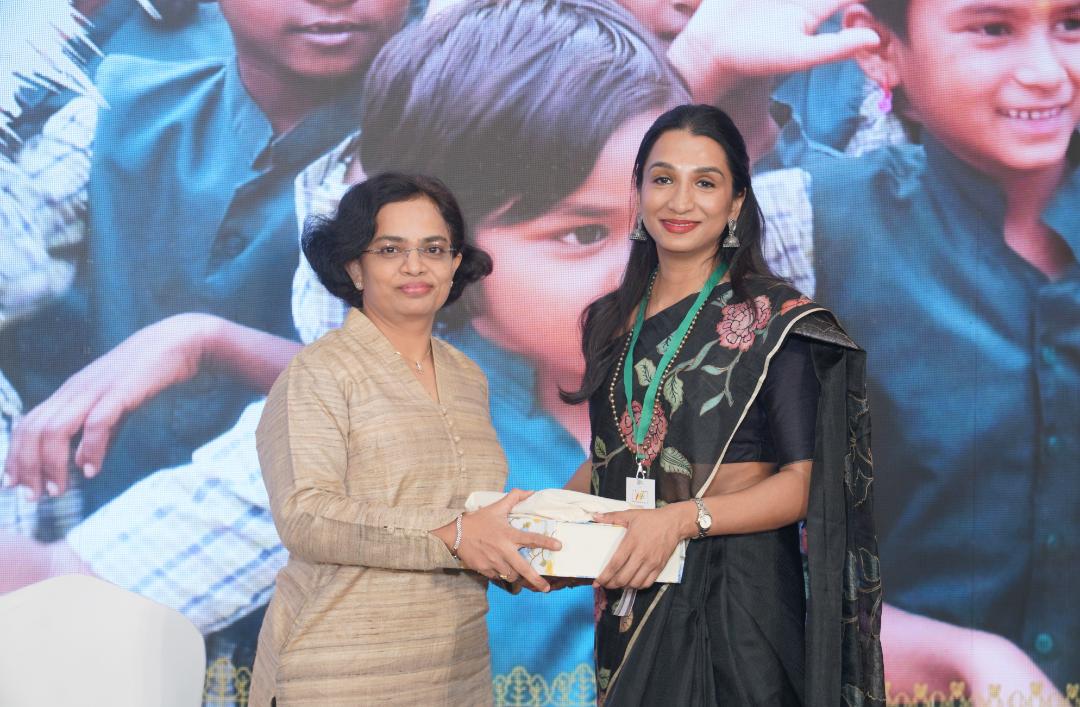
Chennai, 22nd August 2026: The third edition of Kalvi Kural – Dialogues on Primary Education for a Thriving India, Madhi Foundation’s flagship symposium on foundational learning, brought together education leaders, government representatives, teachers, students, practitioners, researchers, technology experts and civil society organisations for a full day of dialogue in Chennai.
The symposium created space to examine some of the most pressing questions shaping primary education today, including artificial intelligence in classrooms, the limits of one-size-fits-all education models, measurement and assessment, community participation, teacher mentoring, and the role of children in shaping the schools they experience.
Teach for India, CEGIS, Vidhya Vidhai Foundation and The Agency Collective were session partners for the event.
Keynote and special address
The keynote address was delivered by Tmt. Pooja Kulkarni IAS, CEO, Tamil Nadu Infrastructure Development Board, who called for foundational learning to move beyond a time-bound programme mindset and become central to the everyday functioning of schools.
Tmt. Pooja Kulkarni IAS | CEO, Tamil Nadu Infrastructure Development Board: “Foundational learning should not be treated as a programme with an end date; it must be the core organising logic of every classroom. We need to clearly define what we want children to know and be able to apply in everyday life, and align teaching, assessment, remediation and teacher support around those outcomes. Teachers need continuous, practical support, while parents and communities must become active partners in children’s learning.”

A special address by Mr. C. Devarajan, Chairman, CII Tamil Nadu State Council, brought an industry and leadership perspective to the conversation, linking education with human development, responsibility and the future of the state.
Mr. C. Devarajan | Chairman, CII Tamil Nadu State Council: “I studied in a Tamil-medium school, and I know education has the power to transform lives. Our system must respond to the mental, physical and psychological needs of every child. What we need today is greater accountability and commitment, and more young people willing to step forward and create meaningful change.”

Ms. Merlia Shaukath | Founder, Madhi Foundation: “Kalvi Kural is about bringing together the many people who shape a child’s learning and making sure their voices are heard. Foundational learning cannot be strengthened by one stakeholder alone. It requires us to listen, question our assumptions and work together. Through “From Forests to Seeds”, we wanted to move from the big questions in education to what children and teachers experience every day. We hope the conversations that began here continue beyond this event and lead to meaningful, sustained action for every child.”

From Forests to Seeds: a journey through the education ecosystem
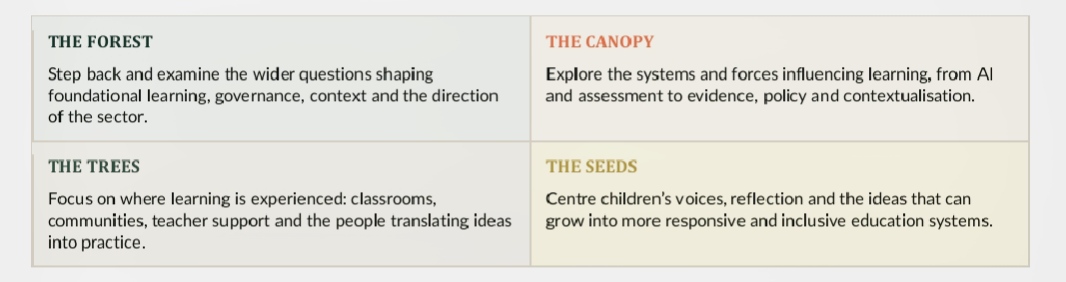
Designed around the theme “From Forests to Seeds”, Kalvi Kural 2026 invited participants to move from the larger forces shaping foundational learning to the everyday realities of schools, classrooms, families and communities, and finally to the voices and ideas that can seed meaningful change.
Conversations across the education ecosystem
The day opened with remarks by Ms. Vijayalakshmi Mohan, Co-Founder, Madhi Foundation, followed by the keynote address and YUVA Talks – Youth Unlocking Voices and Agency. Grade 11 student M. Yaazhini of GHSS Sarabojirajapuram, Nagapattinam District, brought a young person’s perspective to the symposium. The opening segment also asked whether the sector is seeing the full picture of foundational learning, with Porvika Balasubramanian and Rebecca Swittens of Madhi Foundation.

Under The Canopy, discussions explored larger forces shaping learning. Panels asked whether artificial intelligence can truly understand Indian classroom realities, whether one foundational learning model can work across India’s diverse contexts, and whether education systems are measuring what truly matters. Technology, evidence, assessment and policy were repeatedly brought back to the everyday realities of schools.
The afternoon moved into The Trees, focusing on where learning is actually experienced. Sessions examined what it takes for communities to become co-educators, what helps create thriving classrooms, and how mentors can enable better teaching and learning. Practice-based paper presentations added insights from organisations working directly with children and classrooms.
The day concluded with The Seeds, centred on children and the ideas that can shape the future. In “Do We Listen to Children Enough When Designing Schools?”, four students took centre stage to share what they need from schools and education. The session reinforced a core idea of Kalvi Kural 2026: children’s lived experiences are themselves a form of knowledge and deserve a place in conversations about education.


Speakers and panellists
Across the programme, Kalvi Kural brought together voices from government, schools, civil society, technology, research, communities and students.
Can AI Truly Understand the Reality of Indian Classrooms?
Tmt. D. Sneha IAS, District Collector, Kancheepuram; Akshay V, Founder and CEO, EdZola; Akash Burlawar, Chief of Staff, Khan Academy India; S. Prakash, Botany Teacher, Salem District Government Model School. Moderated by Gokul Kumar, Associate Director, Products, Madhi Foundation.
Can One Foundational Learning Model Ever Work Everywhere?
Anurag Shukla, Lead, Centre of Excellence – Political Thought and Practice, SOUL; Diego Luna Bazaldua, Senior Education Specialist, The World Bank; Khroteu Lasushe, District NIPUN PMU Coordinator, Phek, Nagaland; Menechou Akami, Primary School Teacher, GPS Losatephe, Phek, Nagaland; Uma Raman, Teacher Trainer and English Language Teaching Specialist; Umanath Selvan (Vizhiyan), Author, Math Expert and AI in Education Practitioner. Moderated by Vijayaragavan Prabakaran, Consultant, Education Policy & Practice.
Does the System Measure What Matters?
Dr. V. Kumar, Joint Director of School Education, Samagra Shiksha, Tamil Nadu; Dr. D. Palanisamy, BEO, Uthangarai, Krishnagiri District; Archana Hari, Volunteer PMU, Health Department; S. Geetha, District Coordinator, Samagra Shiksha, Chennai; Prabha A. M., Secondary Grade Teacher, Chennai Middle School, Jaladampet. Moderated by Ramnath Sankaran, Assistant Vice President, CEGIS.
What Does It Take for Communities to Become Co-Educators?
Bernat L, State Training Lead (SMC), Samagra Shiksha Programme, Department of Education; J. Shiyamsundar, Director, Institute of Social Education; Murugavalli, கல்வி இணைப்பாளர்(Parent Ally); Saveri Kulshreshth, Lead, Operations, Direct Elementary Programs, Pratham Education Foundation. Moderated by Shivaranjani Ramasubramaniyan, Senior Manager, Research and Innovation, Madhi Foundation.
What Helps Create Thriving Classrooms?
Paper presentations by Usha Srivastava, Vibha, Gujarat; Tarushee Mehra, Involve Learning Solutions Foundation; Indhu Priyadharshini R and Nithya S, NalandaWay Foundation. Moderated by Meenakshi Prabhu, Program Manager Coach, Teach For India.
How Do Mentors Enable Better Teaching and Learning?
Mohammed Aslam, State Coordinator (Quality Wing), Samagra Shiksha, Tamil Nadu; Shveta Lall, Associate Director, Continuous Professional Development Programs, Language and Learning Foundation; Mainak Roy, Co-Founder & CEO, Simple Education Foundation; Vipin Kataria, District Resource Coordinator, Rupnagar. Moderated by Anustup Nayak, Project Director, Central Square Foundation.
Do We Listen to Children Enough When Designing Schools?
Madesh R, Grade 11; Hema V, Grade 11; Jayashree, Grade 9, S. Mohana Surya, Grade 10. Moderated by Prabhakaran Karunamoorthi, City Director, Teach For India, Chennai


What stood out

Across the day, conversations repeatedly returned to one question: What will it take to build education systems that respond more closely to the realities, aspirations and experiences of the people at their centre?
Rather than seeking a single answer, Kalvi Kural created space for multiple perspectives, recognising that strengthening foundational learning requires collaboration across government, schools, families, communities, civil society and children themselves.
About Kalvi Kural
Kalvi Kural – Dialogues on Primary Education for a Thriving India is Madhi Foundation’s flagship symposium on primary education and foundational learning. It brings together diverse voices from across the education ecosystem to question assumptions, exchange perspectives and strengthen dialogue around the systems, classrooms, communities and people that shape children’s learning.
About Madhi Foundation
Madhi Foundation is an education nonprofit working to strengthen India’s public education system, with a particular focus on primary education and foundational learning. Founded in 2016, Madhi partners with state governments across Tamil Nadu, Meghalaya, Nagaland and Andhra Pradesh on evidence-based, system-wide education reforms. With a team of more than 200 professionals and community workers, Madhi brings expertise in foundational learning, teacher development, community engagement and education technology. Through its work on initiatives such as Ennum Ezhuthum and the District Accelerator for Early Learning, Madhi contributes implementation models, technical expertise, data-driven decision-making and scalable solutions to improve foundational learning outcomes for children.